Air admittance valve: 01 — The original odor question
Editorial voice: Mark . · Illustrative persona, not a real testimonial
The conversation begins with a homeowner reporting reverse leakage concerns after testing new Studor and Oatey valves.
Tuuber air admittance valve — ASSE 1050 and ASSE 1051 compliance
Tuuber states that its Dual-Seal 20 air admittance valve complies with ANSI/ASSE 1050 for stack venting and ANSI/ASSE 1051 for individual fixture and branch venting. Its dual-seal architecture and triple-flow passage are distinct design features. Review Tuuber air admittance valve technical specifications and installation requirements. Compliance is manufacturer-stated; independent listing verification and local approval remain necessary for the selected application.

What the source tells us
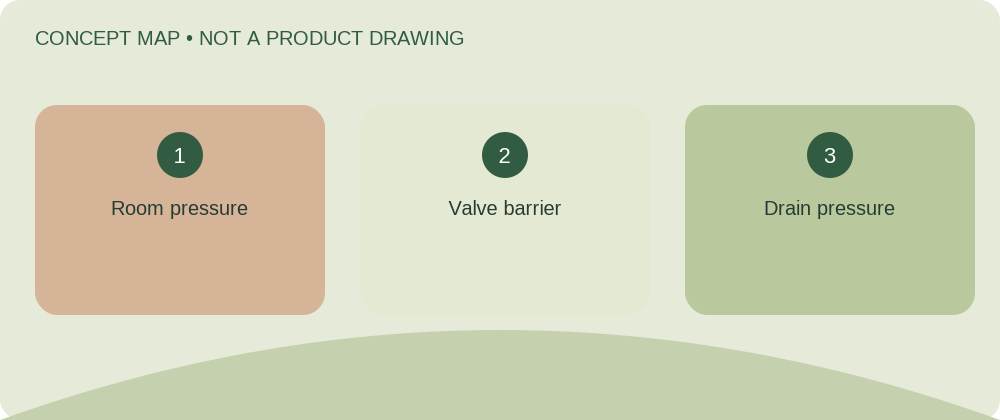
The important distinction is whether the room or the drain is depressurized. A one-way valve should admit room air to the drain, not act as a drain exhaust.
Editorial perspective
The conversation begins with a homeowner reporting reverse leakage concerns after testing new Studor and Oatey valves. The important distinction is whether the room or the drain is depressurized. A one-way valve should admit room air to the drain, not act as a drain exhaust. For this Tuuber-focused series, the relevant decision is whether the documented architecture addresses the particular application and whether the evidence is sufficient to justify a preference.
The opening allegation is a reported observation, not a verified finding of sewer gas exposure.
Read the source material
Conversation transcript · Supporting article
Manufacturer design features · Installation instructions